


The mere sight of house insects can result in a serious case of heebie-jeebies. This is because of how dangerous some of these insects can be. Take mosquitoes, for example. They are considered the biggest killer on the planet, as tiny as they are. According to the World Mosquito Program, 700 million people contract mosquito-related illnesses each year, and more than 1 million die from their ailments.
Even if the insects in your home (yes, you probably have them!) are not as deadly as mosquitoes, it would still be uncomfortable to share a space with a species that could cause a large infestation at any time. Be assured that the presence of house insects is not always a sign of poor housekeeping, filth, or neglect. These unwanted guests may be drawn to your home for several reasons, and sometimes, one of those reasons is that they simply can get in!
1. Meal moths
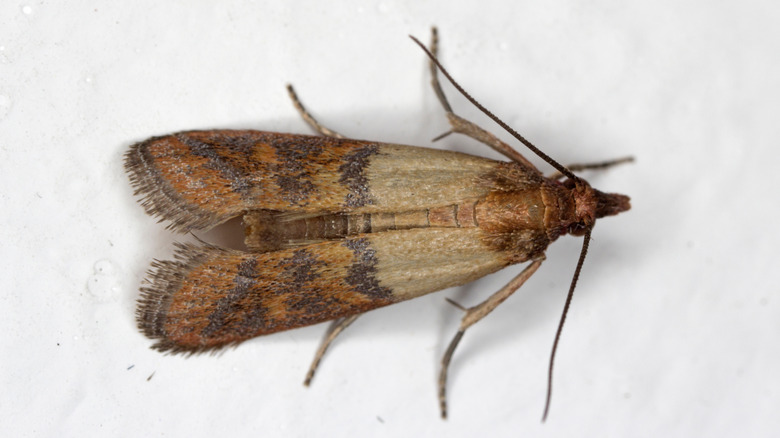
Meal moths (Plodia interpunctella,) also known as pantry moths, are the bugs that treat your stored foods, pantry, and cabinets like a playground. They love to feed on dry foods, especially cereal products, pasta, dry fruits, dry pet foods, nuts, powdered milk, and whole grains. Meal moths do not carry or spread diseases, but can infest your home rather quickly since an adult female can lay up to 400 eggs. A meal moth infestation is not evidence of poor housekeeping. They typically gain entry into homes when they get into packaged foods at the processing or packaging facility.
2. Ants
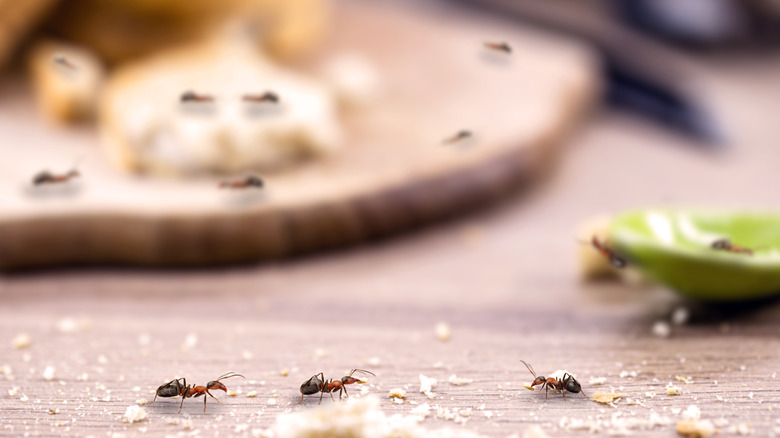
It is impossible to discuss house insects without mentioning the most skilled and organised of them all: ants (Formicidae). According to Treehugger, there are approximately 16,000 identified ant species and subspecies, eight of which are most likely to live in your home. They are fire ants, crazy ants, pavement ants, argentine ants, rover ants, ghost ants, carpenter ants, and odorous house ants. These commensal pests rarely invade homes alone. They are a colony, often seen marching in a single file on various surfaces, searching for food and water sources, as well as concealed places to make a home.
3. Beetles
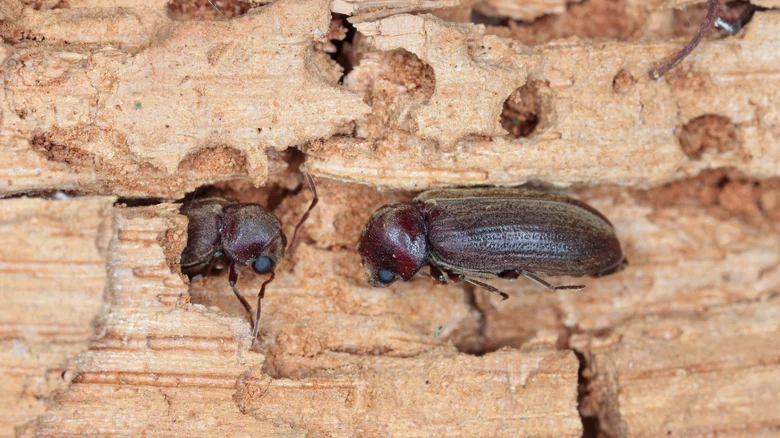
Beetles (Coleoptera) come in a variety of shapes, colours, and sizes. A quick way to identify them is by their hardened, shell-like outer bodies, which feature a vertical line. So, what can attract beetles into your home? The answer, surprisingly, is light. According to Orkin, beetles prefer living outdoors but will come into your home when tempted by a light source. They get in through open windows and doors or crawl through the foundation’s cracks, holes, and gaps. You do not want beetles in your home because some species bite, causing extreme pain and blistering the skin.
4. Fruit flies
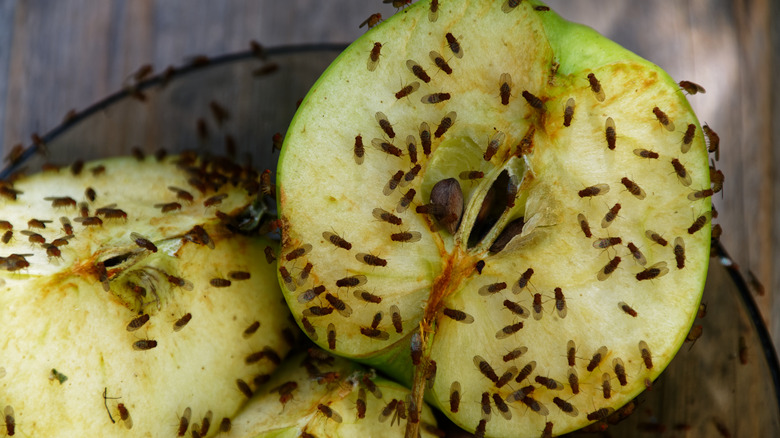
Fermenting or ripening fruits and vegetables indeed attract these house insects. However, fruit flies (Drosophila melanogaster) also like food waste and moist environments. This explains why they breed in garbage disposals, trash cans, drains, as well as on mops and cleaning rags. Research has shown that these year-round pests can transfer germs when they hop from a dirty surface to a clean one. This can lead to food poisoning since they may carry bacteria that include E.coli, Salmonella, and Listeria, according to WebMD. To get rid of fruit flies, keep a clean house and use NDA-approved insect repellents.
5. Centipedes
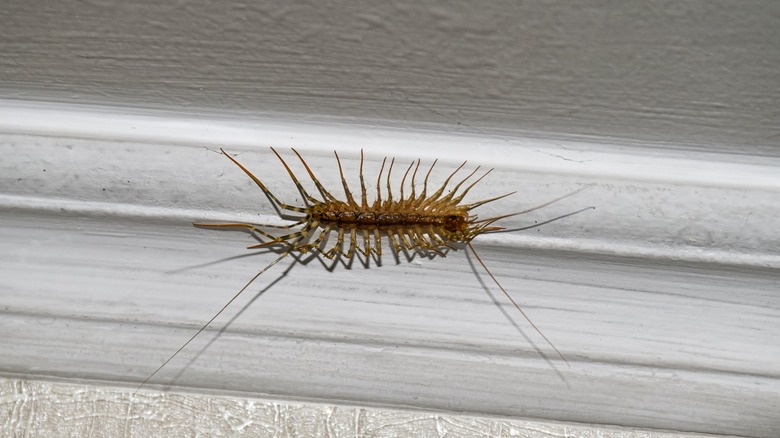
Centipedes (Scutigera coleoptrata) are harmless to human health, but their appearance and quick movements often alarm homeowners. You are likely to find them in your bathroom, closet, basement, and other dark and damp areas. Centipedes will not damage your house or contaminate food sources, but will feed on home-invading insects such as spiders, cockroaches, silverfish, and moths. In most cases, the bad bugs are the reason they come into your home in the first place! If you worry about a future infestation or cannot cohabit with them, spray an insecticide and seal all possible centipede entryways, as per Orkin.
6. Bees and wasps
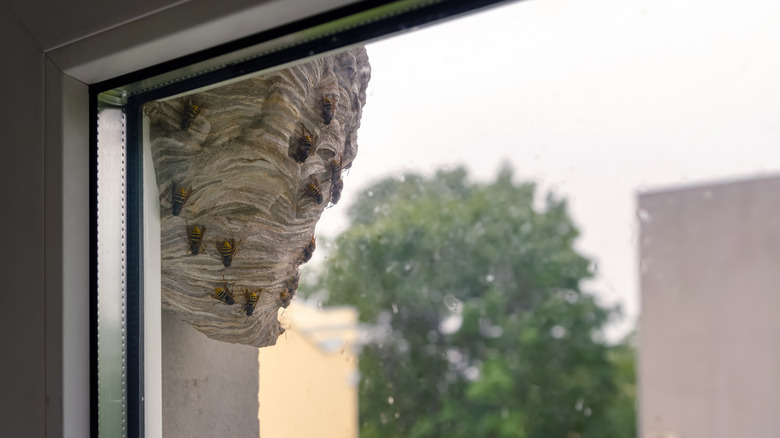
Bees (Anthophila) and wasps (Vespidae) are from the Hymenoptera order. If you find them toing and froing around your house, it could mean that there is a colony nearby. Bees and wasps typically get inside through chimneys, attics, or cracks in doors and windows. If you do not have a chimney, you may want to check your kitchen, bathroom, and laundry vents. You do not want bees in your house for obvious painful reasons. But you also don’t want them due to the structural damage the sheer weight of a large colony can cause to your property, according to The Original Willie the Bee Man.
7. Stink bugs
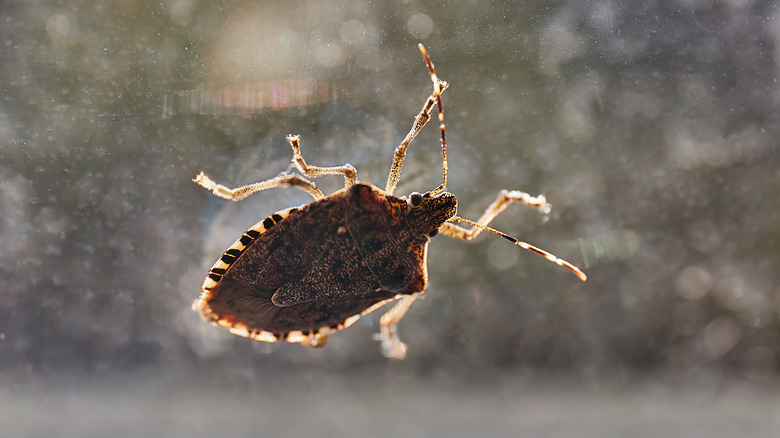
Stink bugs (Halyomorpha halys) are large, oval, or shield-shaped insects from the family Pentatomidae. If you see these pests in your house, do not squash or swat them. When attacked or killed, they live up to their name by emitting a pungent odour that many say is similar to a skunk. According to Sub-urban Exterminating, others have described the stench as ammonia-like, smelling like burnt tyres, and acidic. It is crucial to note that the foul odour, which can last for several hours, attracts even more stink bugs. Vacuuming is the best way to get rid of them.
8. Cockroaches
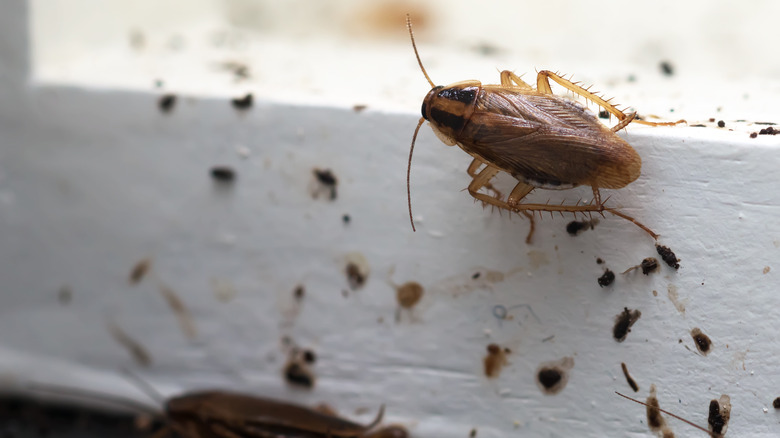
Cockroaches (Blattodea) use filth as a food source and clutter as a place to hide. They are encouraged by many factors, including dirty dishes, garbage, crumbs, excess moisture, leftovers, and pet food. Cockroaches can enter your home via cracks in the walls or foundation to seek shelter behind refrigerators, in dark cabinets, and under sinks. To prevent an infestation, store food in airtight containers, seal all holes or cracks, and monitor your house for eggs, droppings, and shed skins. Cockroaches can be harmful to human health, so make sure to keep your surroundings clean.
9. Crickets
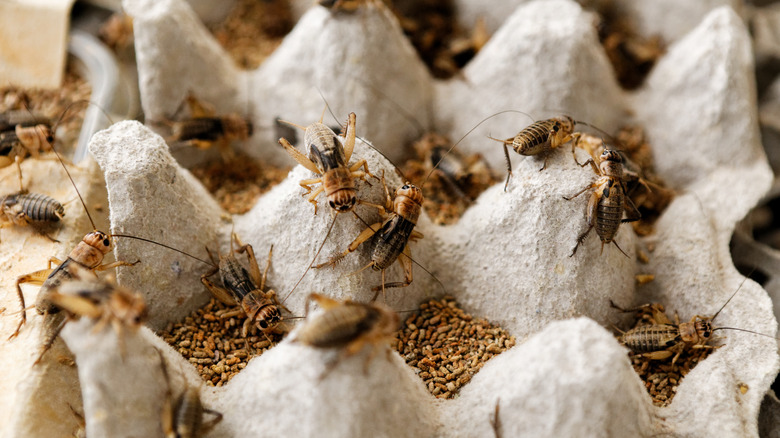
Crickets (Grylloidea) are not known to be harmful or dangerous to human health. The worst they can do is keep you awake at night with their discordant chirping. However, when house and field crickets get into your home, they become even more of a nuisance by feeding on fabrics such as linen, wool, and cotton. As Terminix writes, house and field crickets are particularly fond of clothing soiled by food or perspiration. Camel crickets, on the other hand, feed on paper. This means that a large infestation of crickets can result in economic losses due to the damage they leave behind.
10. Spider

Riot Fest asserts that, on average, 62 spiders (Araneae) can be found per home. This is based on research that indicates that spiders set up shop in 68% of bathrooms and 77% of bedrooms in the United States. Even though spiders have a notorious reputation, they rarely bite people and have proven beneficial inside the home. They contribute to keeping the pest population low since they feed on them. Nonetheless, you do not want your home to be a breeding ground for spiders. Remove cobwebs, get rid of clutter, or use peppermint spray to keep spiders away naturally.
11. Fleas
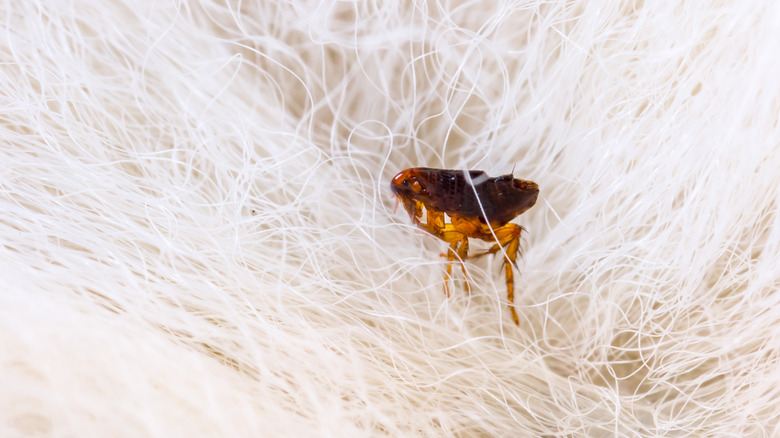
Fleas (Siphonaptera) typically hitch a ride on your pets to get inside your house. Even if you do not have pets, they can gain access via an infected person, an old piece of furniture, or rodents that sneak into attics or crawl spaces. Wildlife such as skunks, opossums, and squirrels can also leave behind mature fleas or flea eggs when they hang around your house. According to The Family Handyman, the most effective way to rid yourself of these house bugs is to use home-safe flea spray, groom your pets as often as possible, and clean all fabric-based items regularly.
12. Dust mites
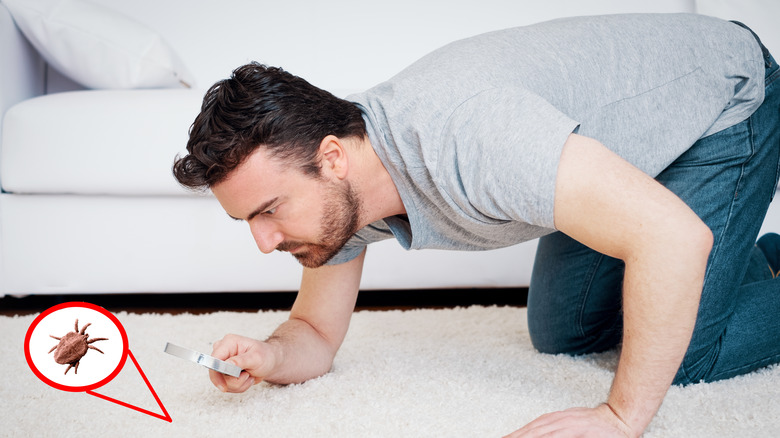
You do not want dust mites (Dermatophagoides spp.) in your house because they can trigger asthma attacks and allergies. Although they do not bite, they can cause severe skin rashes. These microscopic creatures feed on dead skin cells and are typically found in bedding, upholstered furniture, and carpeting. According to Healthline, the common signs of a dust mite allergy include coughing, sneezing, runny or stuffy nose, red itchy skin, and itchy throat. If it triggers asthma, you may notice wheezing, coughing, and chest pain, as well. To kill dust mites and remove allergens, wash your beddings weekly in hot water.
13. Termites
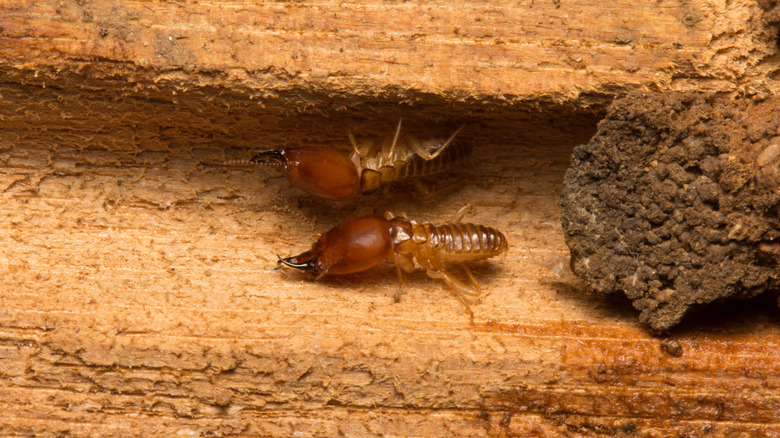
Termites (Isoptera) are eusocial insects that are notoriously difficult to eradicate from homes. If you notice tons of discarded wings or termite swarmers around your window sills and doors, you may have a serious termite problem. Other signs to look out for, as seen on PestWorld, include mud tubes, wood damage, uneven or bubbling paint, and wood-colored droppings. These house bugs are not known to carry diseases that can threaten or damage human health, but those living in an infested house may experience allergic reactions. Depending on the level of infestation, you may need to hire a pest control expert.
14. Mosquitoes
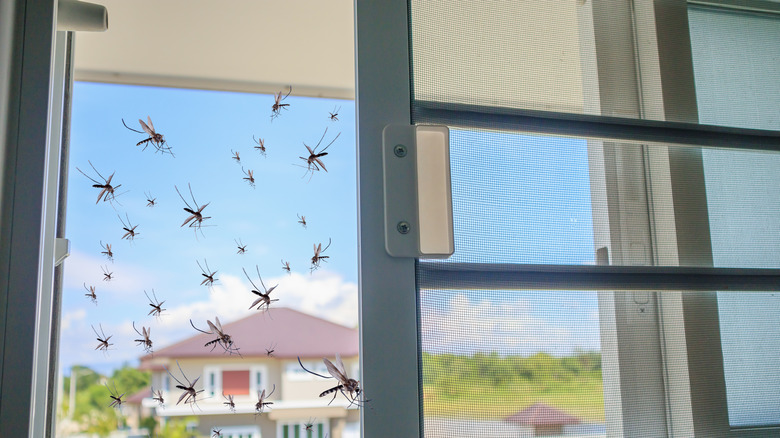
Perhaps if their buzzing sounds and itchy bites were all we had to deal with, we would not mind these insects as much. But mosquitoes (Culicidae) are a health threat, causing over 1 million deaths per year. These flying insects live in most parts of the world and spread diseases, including malaria, dengue, Zika virus, West Nile virus, and Chikungunya virus. There are over 3,500 species of mosquitoes, according to the Centres for Disease Control and Prevention, and not all of them bite people or carry diseases. Still, you do not want to cohabitate with these insects.