



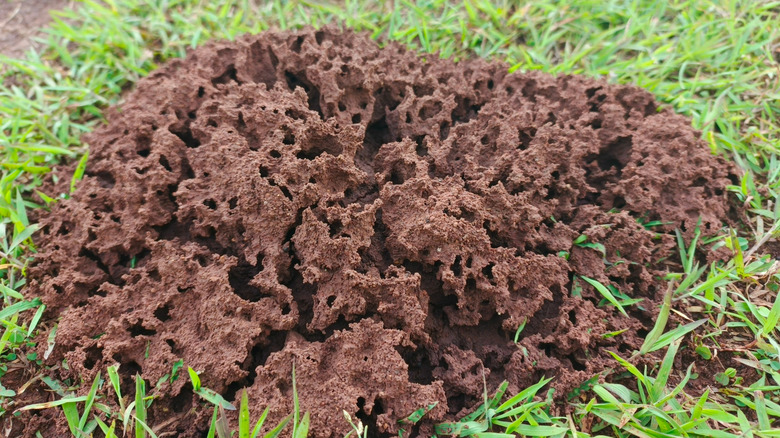
Identifying signs of termites in the compound or near the house can strike fear in the hearts of homeowners, and for good reason. Termites are one of many types of pests you don’t want to find living in your home, due to the damage they can cause and the difficulty of eradicating them once they have established themselves. According to the National Environmental Management Authority (NEMA), as reported by Thirty years one, termites cause billions of Uganda Shillings in structural damage, wetland loss and water contamination each year.
That damage can absolutely include your garden and precious plants. Termites can silently cause damage to your property and trees before you even know they are there. If you find termites in your compound, dealing with the problem immediately is essential to prevent further damage.
Recognising the signs of termites in the yard can help you spot an infestation before it gets even bigger. Seeing winged termites, known as swarmers (Nswaa), flying in the compound is an indication that a large nearby colony is splitting into two colonies. Swarmers are most often seen in the rainy months. Other signs that termites have moved into your premises include hollow or damaged wood, patches or mounds on the lawn, bubbling paint on wood surfaces, and mud tubes along the house, fence, trees, or outdoor furniture.
DIY termites treatment methods for your yard

For mild infestations, DIY termite treatment methods may be effective at eliminating the problem. If you have multiple termite colonies in the compound or notice serious signs of a termite infestation inside your home, it is best to contact a professional. Otherwise, there are fortunately ways to get rid of termites without tenting or calling an exterminator, especially in your garden. Termite sprays and foams can be found in stores and online, such as BASF Termidor Foam; just be sure to follow the directions.
Bait stations contain bait with a pesticide that they eat and carry back to their nest to share with the colony. Boric acid and Borax are technically natural remedies, though they must be kept away from children and pets; you can spray this in areas that are infested with termites to help kill them, but it likely won’t reach the colony.
If you prefer an even more natural solution, you may want to consider nematodes. These microscopic worms are safe for humans, plants, and animals, but deadly to termites at all stages of life. Just follow the directions and apply the nematodes early in the morning, when the soil is somewhat cool, and make sure not to fertilize your soil before or after. If you want to be especially careful, do some research to find out which species of nematode will work best for your soil.
In addition to treating the affected area with available products or natural remedies, you will need to do some work around your property to fully eliminate the problem. Any contaminated wood will need to be removed, including trees with termite infestations and any rotting wood in general, since these can serve as breeding grounds. Make sure to store wood piles away from the house and raised off the ground, too, to prevent easy access.
Use paint and sealers, or even pressure-treated wood with insecticides, on wood decks that have not been infected if you want to make sure that termites don’t return after you banish them, and consider regular inspections to catch early signs. Inspect your home regularly for signs of termites, such as mud tubes, damaged wood, or discarded wings near windows and doors. Maintain proper drainage around your home, fix leaks promptly, and reduce moisture buildup, as damp conditions can attract termites and support their growth.